HMDD Collaborations: Their Impact on the Brand’s Identity
HMDD, short for Happy Memories Don’t Die, has built its name on a philosophy rather than a logo. The brand treats clothing as a vessel for nostalgia, and every collaboration it enters becomes a test of whether that idea can survive contact with another creative voice. When two brands merge visions, one of them usually bends. With HMDD, the bending tends to happen carefully, because the phrase “happy memories don’t die” is not just a tagline — it is the entire reason customers return. Collaborations force the label to answer a harder question than “what does this look like?” It has to answer “does this still feel like us?” That tension is exactly why HMDD’s partnerships matter more than a typical streetwear crossover.
Grabbing borrowed spotlight is largely why most fashion joint projects come about. After a smaller label partners with a bigger name, it gets a jump in traffic — and that’s usually the end of it. In practice, HMDD’s approach reads distinct. Instead of chasing the most attention-grabbing option, the brand usually choose partners who resonate with an emotional tone that’s wistful, memory-driven, and subtly defiant. Because of that selectiveness, the brand identity stays coherent across drops — and it’s worth unpacking one element at a time.
Partnerships serving as a Resilience Check for Identity: Why This Holds True
A company’s identity proves easiest to defend when it works independently. Material decisions, print positioning, and fit decisions all stay inside a single team’s grip. As soon as a additional creative partner steps in, compromises start piling up. HMDD clothing has cultivated its reputation around distinct markers: distressed graphics, oversized silhouettes, and text treatments that reference memory, loss, and time. A partner leaning toward a bolder, more market-friendly look could all too easily reduce those signals into something more generic.
This is where holding back becomes a deliberate edge. Those following HMDDLA have noted that joint-project items preserve its core visual DNA: the same fabric weight, the same worn-in print technique, and the same emotionally charged fleece sweatpants titling found on tags and inserts. That consistency isn’t accidental. It points to an governing standard: partners are free to adjust palette or cut, but the emotional throughline remains unaltered.
Consider the alternative. If HMDD released a collab hoodie with bright, glossy branding and zero reference to its usual themes, longtime buyers would notice within seconds. The brand’s audience isn’t drawn in by trend-chasing; they’re drawn in by specificity. A single misstep — one collection that feels like merchandise rather than memory — could cost more trust than any short-term sales bump would repay.
HMDD’s Own Design Language: The Insights Its Collaborations Uncover
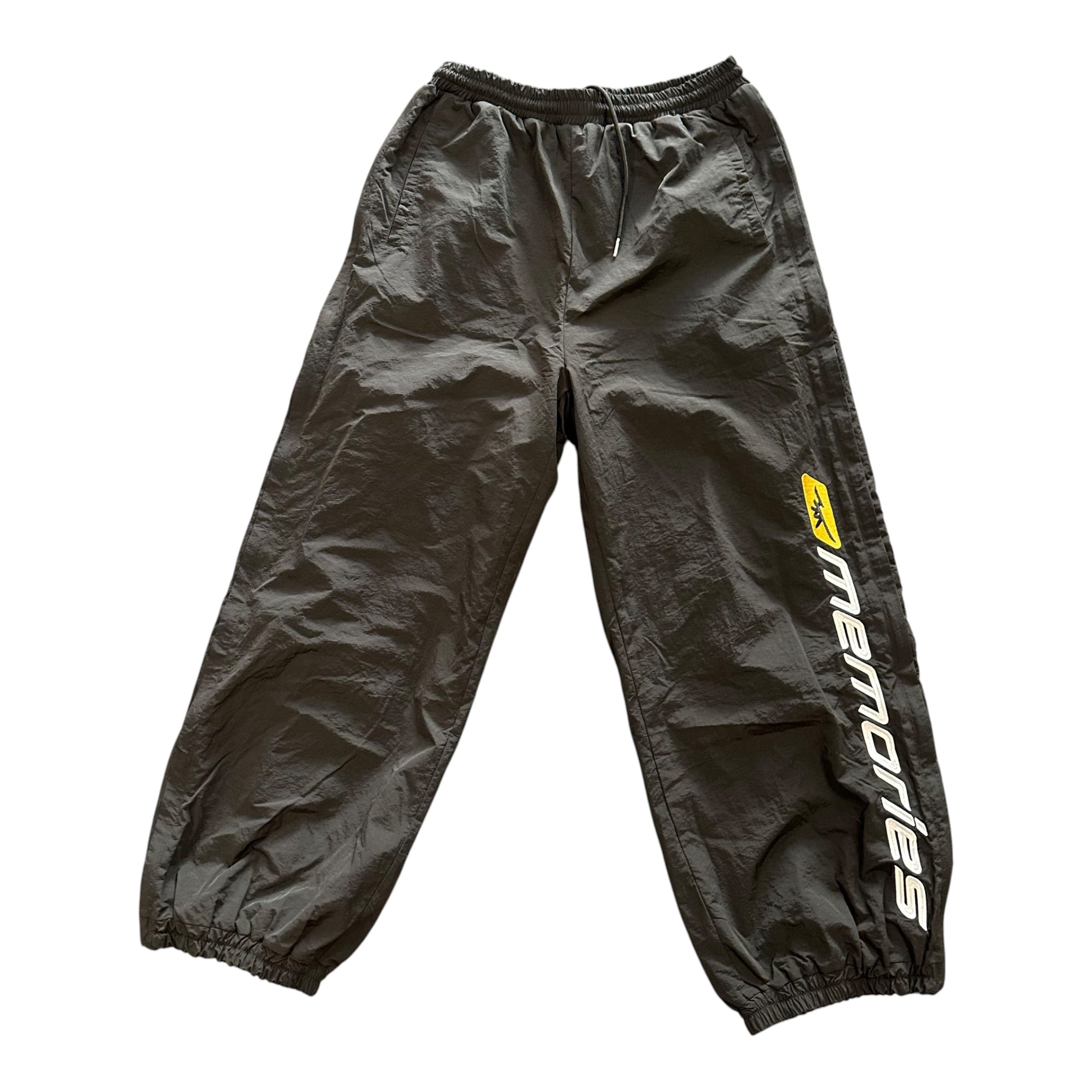
Creative patterns that might under other circumstances go overlooked get brought into focus by any partnership. Any time HMDD partners with someone outside the brand, a few recurring traits repeat across almost every drop: heavyweight cotton fabrics (usually in the 280–400 GSM range for hoodies and sweatshirts), oversized boxy cuts, and artisan-roughened or tonally washed finishes that impart each piece a worn-in quality instead of a off-the-rack one. HMDD’s sweatpants line makes the pattern most obvious — an easy, tapered fit, elasticated rib endings, and a material feel that prioritizes comfort over precise construction.
HMDD applies this same thinking to its shorts. Instead of relegating shorts to an afterthought, the brand extends the same worn-finish methods and typography choices seen across top-layer garments, which keeps a entire seasonal release feeling cohesive instead of disjointed. That consistency across categories — hoodies, sweatpants, shorts, tees — helps explain why shoppers specifically look up “best hmdd clothing” rather than defaulting to a run-of-the-mill streetwear substitute.
- Fabric weight stays dense and weighty, even in hot-season pieces like shorts.
- Type styling draws from handwritten or distressed-stencil styles rather than crisp sans-serif labeling.
- Color palettes favor washed-out blacks, softened greys, and subdued natural tones over vivid colors.
- Visuals evoke nostalgia, transience, and the passage of time rather than pure logo placement.
As soon as a collaborator joins this ecosystem, they’re essentially asked to fall in line with HMDD’s aesthetic rather than impose their own. It’s a bigger demand than it seems, and this is exactly why not every pitched collaboration makes it to production.
The Strategic Reasoning Behind Choosing Partners Carefully
The economics of streetwear prize rarity and penalize excess visibility. A brand that collaborates with everyone ends up standing out with none of them. HMDD’s drop schedule seems to prioritize scarce production numbers and occasional joint releases rather than continuous co-branded output. That pacing does two things at once: it safeguards the brand’s sense of rarity, and it allows the design team the time needed to ensure each release still feels distinctly HMDD.
A pricing rationale also deserves mention. Collaboration pieces in streetwear typically carry a premium over standard catalog items — often 15–30% higher — owing to increased production difficulty, restricted quantities, or dual-brand costs. Customers researching an “hmdd review” before buying often flag price-to-quality ratio as a deciding factor, so any partnership that increases cost without a matching bump in perceived quality is more likely to draw complaints than compliments.
Because of this the most astute fashion joint ventures function less like marketing stunts and more like joint R&D projects. Two teams pool techniques — maybe one contributes a dye process, the other contributes a silhouette — and the outcome ought to seem deserved instead of hastily assembled. When that balance works, each fanbase ends up embracing the other label. If it doesn’t, each audience senses it was treated as secondary.
Weighing Different Collaboration Strategies
To grasp where HMDD positions itself relative to typical streetwear collaboration strategies, it helps to look at a few common tactics used across the industry in 2026. The chart that follows maps out three broad collaboration styles seen in the larger streetwear space, not tied to specific named partners.
| Collaboration Style |
Core Aim |
Usual Drop Scale |
Danger to Brand Voice |
| High-frequency co-branding |
Boost visibility and attention |
Sizable, recurring batches |
Significant — identity weakens with excessive exposure |
| One-off hype drop |
Short-term sales spike |
Very limited, single run |
Moderate — effect dissipates once hype passes |
| Carefully-chosen, ethos-matching partnership (HMDD’s usual pattern) |
Solidify core identity while reaching adjacent audiences |
Limited, occasional |
Low — collaborator falls in line with brand language rather than replacing it |
That third row is where HMDD’s collaborations tend to land. The label seems uninterested in crowding its drop schedule with collaborative product. Instead, each partnership seems designed to answer a specific creative question — a new fabric process, an untried color palette, a new take on distressing — while leaving the emotional heart of “happy memories don’t die” fully intact.
Why This Matters to Shoppers in 2026
For those weighing HMDD against other up-and-coming streetwear names in 2026, collaborations offer a handy litmus test. If a co-branded item still feels distinctly HMDD — same fabric weight, same worn typography, same emotional resonance — that signals the brand’s identity is stable enough to survive growth. If future drops start feeling interchangeable with whichever partner is attached, that amounts to a warning sign worth monitoring.
Buyers checking out HMDD sweatpants, HMDD shorts, or any joint-release item should pay attention to a few concrete details before buying: fabric weight noted within the product description, whether sizing runs standard-fit or intentionally oversized, and whether the piece is part of a serialized or limited run. These details matter more in collaboration releases than in regular catalog drops, since collaboration pricing usually sits higher and expectations rise accordingly.
At the end of the day, HMDD’s collaborations serve as identity checkpoints rather than pure marketing events. Every partnership tests whether HMDD can expand its audience without sacrificing the distinct, nostalgia-driven feel that earned it a following in the first place. The pattern so far points to a brand that cares more about guarding its voice than grabbing every spotlight on offer — and for a label built entirely around emotional resonance, that discipline may be its most valuable asset heading further into 2026.